undefined
Posts
undefined
Followers
Editorial: Something rotten in Columbus
By THE BLADE EDITORIAL BOARD,
17 hours ago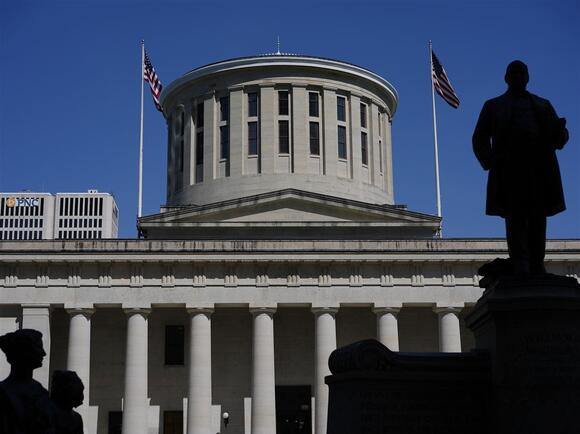
Toledo is on the receiving end of national news coverage it would gladly do without.
The London Daily Mail recently spotlighted “the eight U.S. cities facing an economic death spiral as jobs disappear and neighborhoods are abandoned.” Toledo made the list, which was compiled by the New York-based financial site SmartAsset.
Ironically, the New York Post published a story in October — also drawing on SmartAsset data — hailing Toledo as the “surprising Midwest city that beats NYC, Miami, and San Francisco for the biggest jump in home values.”
Yet even that good news carries a dark lining, underscoring the region’s underlying economic weakness. Home values are rising in Toledo largely because so few new houses are being built while blight and abandonment shrink the supply. Out-of-state investors are buying up properties with cash to rent back to residents in a community that has struggled with population loss since 1970.
According to the U.S. Bureau of Labor Statistics, Lucas County posted the worst economic performance among Ohio’s 15 largest counties, with 2.7 percent fewer jobs in March, 2026, than in March, 2025.
Recent Blade headlines on severe municipal and county budget crises — detailing a 13 percent shortfall for Lucas County, alongside 89 layoffs and the elimination of 91 vacant positions for the city of Toledo — illustrate how thoroughly local governance is being consumed by economic contraction.
Lucas County is hardly alone. Cuyahoga, Hamilton, Summit, Mahoning, Lorain, Lake, and Greene counties all lost jobs in 2026, according to BLS data. Together, Ohio’s 15 largest counties account for two-thirds of the state’s work force, which helps explain why Ohio Republicans were punished by voters despite the state’s self-proclaimed status as a “top state for business.”
Outside of Franklin, Delaware, and Licking counties in central Ohio, the state stagnated between 2025 and 2026. Metro Columbus is booming while much of the rest of Ohio is neglected — or actively held back — by state policy.
One glaring state-imposed obstacle to Greater Toledo’s growth is the law granting county commissioners veto power over renewable energy projects. As the nation’s solar manufacturing hub — anchored by First Solar’s massive footprint — northwest Ohio is directly harmed by that restriction. Most puzzling of all, this self-inflicted blow to regional economic development was championed at the Statehouse by two northwest Ohio lawmakers: Sens. Rob McColley (R., Napoleon) and Bill Reineke (R., Tiffin).
All of northwest Ohio is hungry for growth, and nowhere in the state is political backing for expanding industries more urgently needed than in Greater Toledo.
Distribution and logistics — another natural growth sector for our region — is similarly throttled by the lack of a direct, full-access highway linking Toledo to the Columbus growth corridor. The corridor between Toledo and Columbus remains the worst commercial truck route in Ohio, underscoring why a billion-dollar bypass is vital to our regional economy.
When most of Ohio mirrors Toledo’s economic struggles, the problem isn’t just local — something is rotten in Columbus.
 Add to Preferred Sources