undefined
Posts
undefined
Followers
Siri has failed users again and again – here’s how Apple is making it better
By Andrew Griffin,
9 hours agoIt is 2011, and Scott Forstall, the Apple executive responsible for iPhone software, is introducing someone else: Siri. The tool allowed you to talk to your device, he said, using natural language to ask for whatever you needed – from the weather to sending text messages.
Just a few years later, however, Forstall would be out of the company, leaving amid the scandal that followed the poor reception of another new creation, Apple Maps. And Siri was seemingly suffering the same fate as its creator: the virtual assistant was a once-feted star at Apple, attracting increasing criticism and suggestions that it needed an overhaul.
Those criticisms would drag on, even as Apple added new capabilities to the voice assistant and improved its performance. And they became even louder in recent years, as AI hype and increasingly powerful personal assistants made by companies from OpenAI to Anthropic led to questions about whether Apple was uncharacteristically out of step.
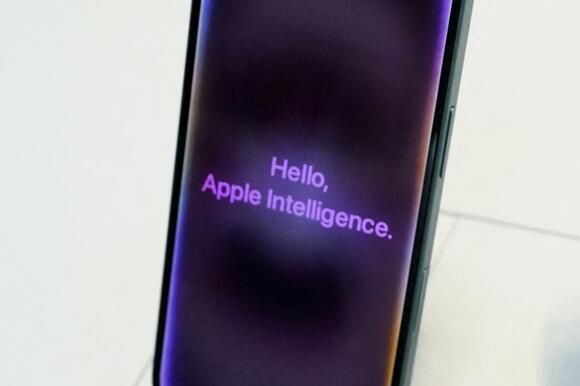
The company tried to address those in 2024, when it announced “Apple Intelligence” and a host of improvements to Siri. It would now be able to pull from a user’s personal context to answer questions, for instance, allowing them to really talk to it in the same way as one might a human assistant.
It didn’t work. The AI features were hit by delays so dramatic that Apple had to pull advertising that had promised them to iPhone users. Apple had finally answered the questions about where Siri was going – but, once again, it had failed to actually get there.
Then, in 2026, it happened: Apple announced it had completely overhauled Siri, including borrowing from a partnership with Google that would allow it to use some of its AI technology, and would be re-launching it as Siri AI. That arrived with the latest iOS update in September, and Apple finally seemed to be catching up.
Siri AI didn’t entirely fix the voice assistant. Indeed, some users have complained that it has made key functions actually less useful: because it is now more complex, simple tasks such as starting a timer might take longer.
But it was broadly well received. As soon as it was, however, another technology threatened to make it fall behind once again: agentic personal assistants.
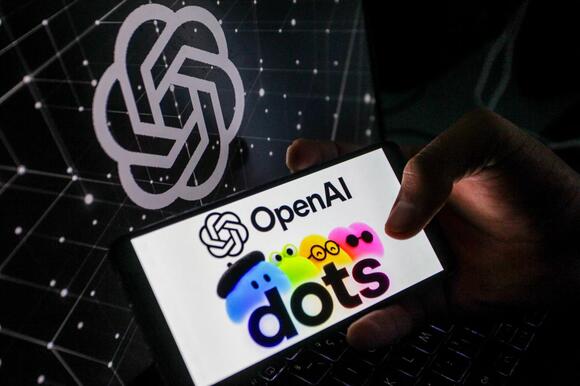
Agentic systems promise not only to be able to answer questions but actually do things: they can use a computer in a similar way to a human, allowing them to undertake tasks on their behalf. They have been released by everyone from Meta, in the form of Muse, to OpenAI’s Dots – and promoted as a way of organising meetings, doing shopping, undertaking research and the other daily admin tasks that get in the way.
Siri does not, for the most part, have any of those features. While it has always been able to do some simple tasks – users can ask it to send a message on their behalf, for instance – they cannot be complex, and are largely limited to Apple’s own apps.
There have been indications that Apple plans to change this. Recently, for instance, it announced new tools that allow developers to hook up their own apps to Siri AI. It also posted a job listing asking applicants to “imagine an AI agent that can use a computer the way a capable person does”, suggesting that it is building a new system that can do things on users’ behalf.
The same job listing, however, made clear that the successful applicant will be building a tool that “does all this privately and with the polish people expect from Apple”. And that might be one of the many troubles that the company faces as it tries to catch up with its competitors: its commitment to quality, and its principles.
The quality is a concern because Apple has repeatedly said that it wants its AI tools to work in the same way as its products: seamlessly and reliably. But personal AI agents are by definition hard to constrain, and can work in ways that their creators could not imagine and would not like.
What’s more, they represent a potential privacy problem, especially for a company for whom that is a fundamental principle. Personal AI agents are only as good as the data they have and the power they are given, and so allowing an AI system to use people’s personal information in ways that are both secure and useful could pose a challenge.
This week, for instance, Apple rolled out new changes in macOS that try to discourage users from giving up full access to their computers, which is a requirement to make such personal agents work but also means that their developers can potentially see intimate personal data such as messages and photos. It is a security update, but also one that could bring questions – if Apple eventually launches its own virtual assistant with similar capabilities, third-party developers may very well argue that the company is abusing its own power to favour its own technology.
Apple has seen a version of these troubles before. When it launched Siri AI, it said that it would be unable to do so in Europe because of the EU’s Digital Markets Act. European regulators said that it was unfair for Apple to use its power over the iPhone to make Siri the only AI assistant with such wide-ranging access to a user’s data; Apple said that giving other companies the same access would pose a serious risk to users, since any company would then be able to both look at personal data and take actions on their behalf, and that it would therefore not be able to give customers the protections it thought were required.
It forced Apple into a difficult decision: to choose between giving people the features they wanted and protecting the privacy and security that is a fundamental principle of how the company works. And, as it continues to roll out more similar features, it will keep pushing up against those hard questions: the company wants to be at the cutting edge of AI technology, but sometimes that can be a little sharp.
 Add to Preferred Sources